Introduction
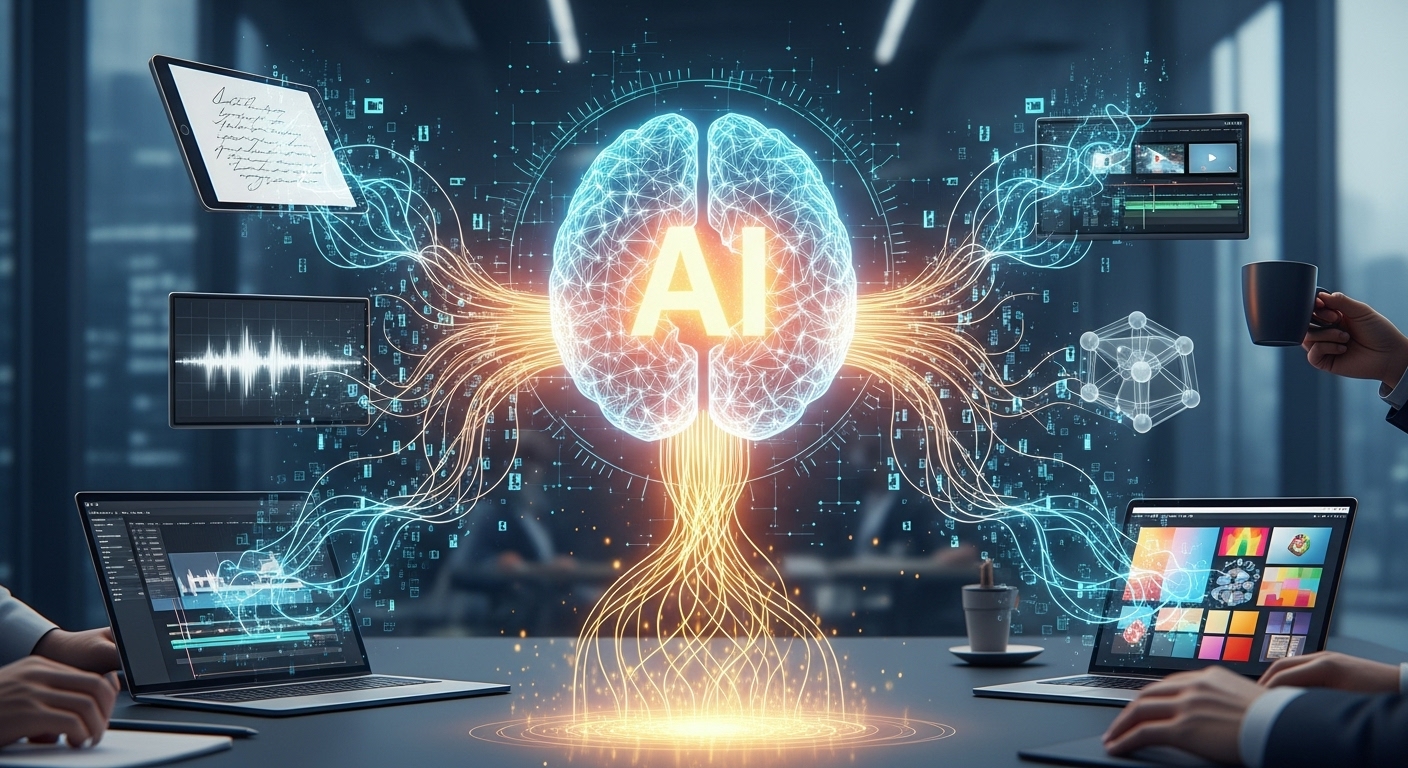
Artificial intelligence has steadily moved from being a futuristic concept to a powerful force that is reshaping industries across the world. Among its many applications, one of the most transformative has been in the field of content creation. Whether it is writing articles, designing graphics, editing videos, generating marketing campaigns, or personalizing user experiences, AI is redefining how content is made, distributed, and consumed. Content creation has traditionally been labor-intensive, requiring creativity, technical expertise, and significant time. With the arrival of AI-driven tools, much of this process is becoming faster, more efficient, and in many cases, more accessible to people without specialized skills. However, this transformation brings both opportunities and challenges. The rise of AI is not just changing the way content is produced but also reshaping the role of human creators, raising ethical questions, and redefining creativity itself.
The Evolution of Content Creation
Before understanding the role of AI, it is important to appreciate the journey of content creation. For centuries, humans relied on manual methods of expression, from painting and writing to performing arts. The printing press expanded content distribution, while photography and film brought visual storytelling to the masses. The digital revolution introduced blogs, social media, and streaming platforms, allowing anyone with an internet connection to become a creator. Now, AI is ushering in a new chapter, one where algorithms can generate entire articles, compose music, create lifelike images, and even mimic human voices. This evolution reflects the natural progression of technology: each new development reduces barriers to entry and expands creative possibilities, but also redefines the role of the human creator in the process.
Writing and Journalism
One of the most visible areas where AI has impacted content creation is in writing. AI-powered systems can now produce news summaries, blog posts, product descriptions, and even poetry. These tools are capable of analyzing large volumes of data and generating coherent narratives in a fraction of the time it would take a human writer. For journalism, AI can help cover routine stories such as financial reports, weather updates, and sports scores, freeing human journalists to focus on investigative work and storytelling. In marketing, AI-generated product descriptions or email campaigns allow companies to maintain consistency across thousands of items or customers. While AI-written content may not yet match the nuance and depth of human expression in all cases, it is already powerful enough to handle tasks that require efficiency, scale, and accuracy.
Visual Design and Art
AI is also changing how visual content is created. Graphic design, once a specialized skill requiring advanced software knowledge, is becoming more accessible through AI-powered tools. These applications can generate logos, posters, social media graphics, and even entire websites with minimal input. Artists are experimenting with AI to create new forms of digital art, blending human creativity with algorithmic patterns. AI-generated images are being used in advertising, film production, and even fine art exhibitions. The debate continues over whether AI art diminishes human creativity or enhances it by providing new tools of expression. Regardless of opinion, the reality is that AI is expanding the boundaries of what is possible in visual design, making professional-level content creation available to more people.
Video Production and Editing
Video has become one of the most dominant forms of content in the digital age, and AI is playing a critical role in making production more efficient. AI-powered tools can automatically edit videos, generate subtitles, match background music to visuals, and even create synthetic actors or voices. In marketing, AI enables personalized video advertisements tailored to individual users. In entertainment, AI-generated deepfake technology allows filmmakers to recreate historical figures or de-age actors. For creators working on tight budgets, AI editing tools make professional-quality video production more accessible than ever before. However, this also raises concerns about misinformation and authenticity, as manipulated videos can be used to mislead audiences.
Music and Audio Creation
AI is not only influencing text and visuals but also revolutionizing music and audio. Algorithms can now compose original pieces in various genres, mimic the style of famous artists, or generate background music for videos and podcasts. Musicians use AI to experiment with new sounds, streamline production, and even collaborate with virtual composers. In podcasting, AI tools can edit recordings, remove background noise, and create realistic synthetic voices. While purists argue that music requires a human touch, many see AI as an opportunity to expand creativity rather than replace it. By handling repetitive tasks or generating inspiration, AI allows musicians and audio creators to focus more on expression and storytelling.
Marketing and Personalization
Marketing is one of the fields most heavily influenced by AI-driven content creation. Modern audiences demand personalized experiences, and AI makes it possible to deliver them at scale. Algorithms analyze user behavior, preferences, and demographics to create targeted advertisements, product recommendations, and custom content. For example, an e-commerce brand can use AI to automatically generate personalized emails with product suggestions tailored to each customer’s history. Social media platforms use AI to curate content feeds, ensuring that users see posts most relevant to their interests. This level of personalization enhances engagement but also raises ethical concerns about data privacy and manipulation.
The Role of Natural Language Processing
Natural Language Processing (NLP) is at the heart of AI content creation. NLP allows machines to understand, interpret, and generate human language with increasing accuracy. This technology powers chatbots, virtual assistants, automated writing tools, and translation services. Content creators can now reach global audiences by using AI-driven translation that adapts not just words but also cultural nuances. As NLP continues to advance, it will further blur the line between human and machine-generated text, enabling more natural and sophisticated interactions between creators and their audiences.
Empowering Individual Creators
One of the most positive aspects of AI in content creation is how it empowers individual creators. In the past, producing professional-quality content required access to expensive equipment, training, and resources. Today, a single person with a laptop and AI tools can design graphics, edit videos, write scripts, and distribute content globally. This democratization of creativity means that more voices can be heard, and more diverse stories can be told. AI is leveling the playing field, allowing creators from different backgrounds and regions to compete on a global stage. This expansion of creative participation has the potential to enrich culture and foster innovation.
The Threat to Human Creativity
Despite its many benefits, AI also poses challenges to human creativity. Some fear that reliance on AI-generated content may stifle originality, leading to a flood of generic and repetitive material. If algorithms dominate content production, human creators may feel pressure to conform to trends dictated by data rather than pushing boundaries of imagination. There is also the risk of job displacement in industries like journalism, design, and marketing, as routine tasks become automated. While AI can augment human creativity, it cannot replace the depth, emotion, and lived experience that human creators bring to their work. The key lies in finding a balance where AI is used as a tool rather than a replacement.
Ethical and Legal Considerations
The rise of AI in content creation brings significant ethical and legal challenges. Questions about copyright and ownership are at the forefront. If an AI generates a piece of music or artwork, who owns the rights—the programmer, the user, or the machine itself? Issues of authenticity also arise, especially with technologies like deepfakes that can convincingly replicate real people. Misinformation, plagiarism, and exploitation are growing concerns in the AI-driven content landscape. Additionally, the use of personal data to fuel content personalization raises privacy issues. Policymakers, creators, and technology companies will need to work together to establish clear guidelines that protect both innovation and individual rights.
The Future of AI and Human Collaboration
Looking ahead, the future of content creation is not about humans versus machines but about collaboration. AI can handle repetitive tasks, analyze massive amounts of data, and provide inspiration, while humans bring emotional intelligence, cultural context, and imagination. Together, they can create content that is both efficient and meaningful. We may see a future where AI tools act as creative partners, offering suggestions, refining drafts, or even co-creating alongside human artists. This symbiotic relationship has the potential to redefine creativity, producing richer and more diverse content than ever before.
Education and Skill Development
As AI becomes more embedded in content creation, education and skill development must adapt. Creators of the future will need to understand how to leverage AI tools effectively while maintaining their unique creative voice. This requires not only technical literacy but also critical thinking about the ethical use of AI. Schools, universities, and training programs are beginning to integrate AI literacy into their curricula, preparing the next generation of creators for a world where technology is an inseparable part of the creative process. Those who can combine creativity with technological fluency will be best positioned to thrive in this new era.
Global Impact on Culture
The integration of AI into content creation will have a profound impact on global culture. It will allow for faster cross-cultural exchange, with AI-driven translation making content accessible to diverse audiences. At the same time, there is a risk of cultural homogenization if algorithms prioritize popular trends over local or niche voices. Creators must be mindful of preserving cultural diversity while embracing the opportunities AI offers. By using AI responsibly, content creation can become a tool for fostering understanding, empathy, and collaboration across borders.
Conclusion
Artificial intelligence is fundamentally reshaping the landscape of content creation. From writing and design to video, music, and marketing, AI is making the process more efficient, accessible, and personalized. It empowers individual creators while challenging traditional roles in industries once dominated by human labor. Yet, this transformation is not without risks. Issues of authenticity, ownership, creativity, and ethics loom large, demanding thoughtful approaches from both creators and policymakers. The future of content creation will be defined not by machines replacing humans, but by humans learning to collaborate with machines in ways that expand the boundaries of creativity. By embracing AI as a partner rather than a competitor, society can unlock new forms of expression that were once unimaginable, ensuring that creativity continues to thrive in the age of artificial intelligence.