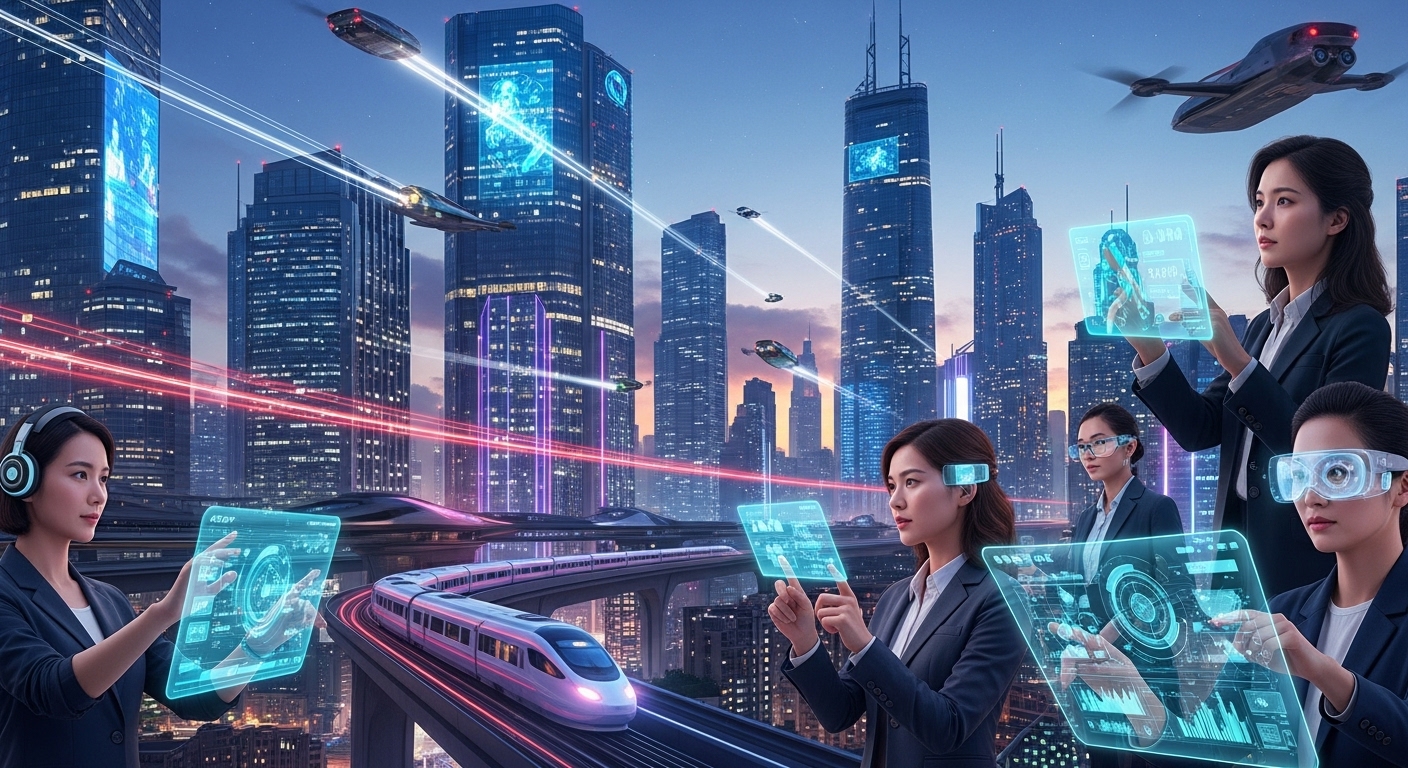

Technology is advancing at a breakneck speed, driving change across every facet of our daily lives. What once seemed like futuristic ideas are now part of our reality, transforming the way we live, work, and interact with the world. From artificial intelligence to quantum computing, the cutting-edge developments of today are laying the groundwork for a future that was once unimaginable. In this blog, we’ll explore some of the most exciting technologies that are reshaping our world and what they mean for the future.
Artificial Intelligence: A Revolution in Thought and Action
Artificial Intelligence (AI) is arguably one of the most transformative technologies of the 21st century. Its applications are vast and varied, influencing industries ranging from healthcare and finance to entertainment and manufacturing. AI systems are designed to perform tasks that would normally require human intelligence, such as recognizing patterns, learning from data, and making decisions.
In healthcare, AI is being used to diagnose diseases with remarkable accuracy, often identifying health issues earlier than traditional methods. In business, AI is driving efficiency, automating tasks, and improving customer service through chatbots and personalized recommendations. The potential of AI is only just beginning to be realized, and as the technology continues to evolve, we can expect even more breakthroughs that will reshape industries and the way we live our lives.
5G: The Backbone of Tomorrow’s Connectivity
The rollout of 5G networks is one of the most anticipated technological advancements in recent years. Promising internet speeds up to 100 times faster than 4G, 5G will revolutionize how we interact with the digital world. It’s not just about faster download speeds; it’s about enabling a new wave of innovation that relies on seamless connectivity and real-time data exchange.
With 5G, the Internet of Things (IoT) will become even more powerful, connecting billions of devices and allowing them to communicate instantly. From self-driving cars and smart cities to remote healthcare services and advanced manufacturing systems, 5G will make it possible to manage and optimize these technologies at a scale and speed never before imagined. The widespread adoption of 5G will be a game-changer for industries, opening up new opportunities and transforming how businesses operate.
The Internet of Things: Making the World Smarter
The Internet of Things (IoT) refers to the network of connected devices that communicate with one another, enabling them to collect and share data. From everyday gadgets like smart thermostats and fitness trackers to complex industrial sensors, IoT devices are designed to make our lives more efficient, personalized, and connected.
In homes, IoT is enabling smart living, where devices work together to adjust lighting, control temperatures, and enhance security systems. In industries such as manufacturing, IoT is used for predictive maintenance, optimizing production processes, and improving supply chain management. As the number of connected devices grows, the IoT ecosystem will continue to expand, creating more opportunities for innovation and improving the way we live and work.
Blockchain: Transforming Trust and Transparency
Blockchain technology, initially popularized by cryptocurrencies like Bitcoin, is now being explored for a wide range of applications beyond digital currency. At its core, blockchain is a decentralized, transparent ledger system that allows for secure, verifiable transactions without the need for intermediaries.
Blockchain’s ability to offer an immutable record of transactions makes it highly attractive for industries that require transparency and security, such as supply chain management, finance, and healthcare. In supply chains, blockchain can track the origin of goods, ensuring authenticity and preventing fraud. In healthcare, it can be used to securely store and share patient data across institutions. As blockchain continues to mature, it has the potential to disrupt various industries by providing greater efficiency, security, and accountability.
Quantum Computing: The Frontier of Computational Power
Quantum computing is a field of technology that promises to revolutionize how we solve complex problems. Unlike classical computers, which use bits to process information, quantum computers use quantum bits, or qubits, which can represent multiple states simultaneously. This unique property allows quantum computers to perform certain calculations exponentially faster than traditional computers.
Although quantum computing is still in its early stages, its potential applications are immense. It could enable breakthroughs in fields such as cryptography, drug discovery, and artificial intelligence. Quantum computers could simulate molecular interactions with such precision that they might unlock new treatments for diseases or new materials for manufacturing. While there are still significant hurdles to overcome, quantum computing represents the next frontier in computing power and could redefine industries in the coming decades.
Augmented and Virtual Reality: Reimagining How We Experience the World
Virtual Reality (VR) and Augmented Reality (AR) are two technologies that are transforming how we interact with digital content. VR creates fully immersive environments, while AR overlays digital elements onto the real world, enhancing our physical surroundings with interactive, digital layers.
In gaming and entertainment, VR and AR offer entirely new experiences. In healthcare, VR is being used for pain management, surgical training, and therapy, providing patients with controlled environments that aid in their recovery. In education, AR is helping students visualize complex concepts, making learning more engaging and interactive. As the technology behind VR and AR continues to improve, these technologies are expected to have a profound impact across industries, from entertainment and education to retail and real estate.
Ethical Considerations: Navigating the Complexities of Tech Innovation
As technology continues to advance at a rapid pace, it raises important ethical questions that must be addressed. With AI, there are concerns about privacy, security, and potential biases in algorithms that could perpetuate inequality. The growing use of IoT devices also raises concerns about data privacy, as personal information is constantly being collected and transmitted by these connected devices.
Furthermore, as blockchain technology becomes more widely used, there are concerns about its environmental impact, especially in terms of the energy consumption required to validate transactions. The rise of deepfake technology, which uses AI to create convincing but fake videos or audio recordings, also presents challenges for misinformation and trust in digital media.
As these technologies continue to evolve, it is essential to develop ethical frameworks and regulatory measures that protect individuals’ rights and ensure that technology is used for the greater good. Balancing innovation with responsibility will be crucial as we navigate the complexities of a rapidly advancing technological landscape.
Conclusion: A Future Driven by Innovation
The technological advancements of today are creating a world that is more connected, efficient, and intelligent than ever before. From AI and 5G to blockchain and quantum computing, these innovations are changing the way we interact with the world and each other. While these technologies hold immense promise, they also come with challenges that must be addressed to ensure that they are used ethically and responsibly.
As we move into the future, one thing is clear: technology will continue to drive change, creating opportunities and challenges in equal measure. By embracing innovation while staying mindful of the ethical considerations, we can ensure that these groundbreaking technologies benefit society as a whole, shaping a future that is not only technologically advanced but also fair, secure, and sustainable.