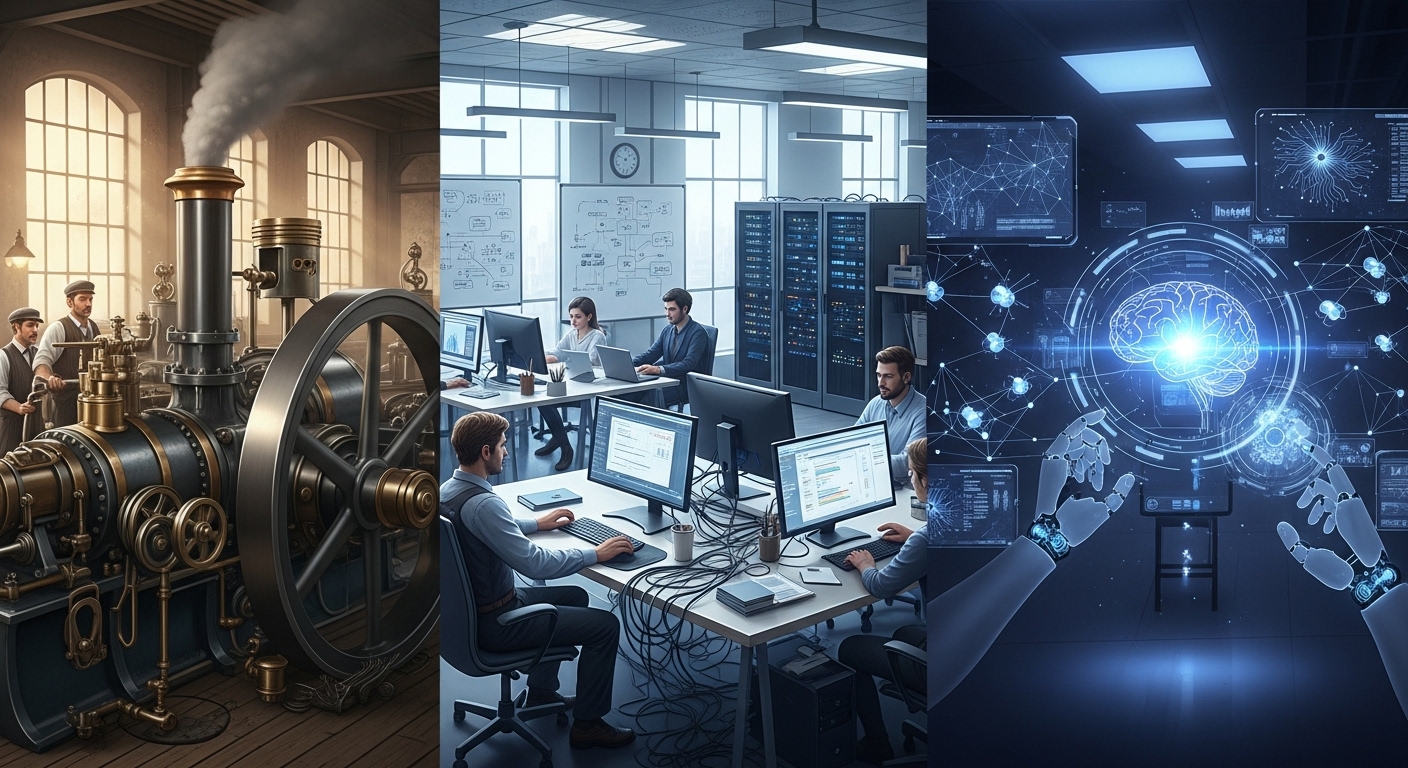
Technology has always played a pivotal role in shaping human civilization, from the invention of the wheel to the development of the internet. However, the pace at which technology is advancing today is unparalleled. With each passing year, new innovations emerge, pushing the boundaries of what is possible and reshaping the way we live, work, and interact with the world. Technologies like artificial intelligence, blockchain, quantum computing, 5G networks, and augmented reality are not just futuristic ideas; they are changing industries and society as a whole. In this blog post, we will explore these cutting-edge technologies and discuss how they are set to impact various aspects of our lives in the near future.
The Rise of Artificial Intelligence: Smart Machines for Smarter Decisions
Artificial intelligence (AI) is one of the most transformative technologies of the 21st century. AI refers to the ability of machines to mimic human intelligence, enabling them to perform tasks that typically require human cognition, such as problem-solving, pattern recognition, and decision-making. While AI has been a topic of research for decades, it has gained significant traction in recent years due to advancements in computing power, data availability, and machine learning algorithms.
One of the most notable applications of AI today is in the form of machine learning (ML). Machine learning enables algorithms to learn from data, improving their accuracy and performance over time without being explicitly programmed. For example, AI systems can analyze vast amounts of data to identify trends and make predictions in fields like healthcare, finance, and marketing.
In healthcare, AI is being used to improve diagnostics and personalize treatment plans. Machine learning algorithms are helping doctors identify diseases like cancer earlier by analyzing medical images, and AI-powered tools can even predict patient outcomes with remarkable accuracy. In finance, AI is streamlining processes like fraud detection and credit scoring. Additionally, AI is revolutionizing customer service with chatbots and virtual assistants that can handle a wide range of inquiries, freeing up human agents to focus on more complex tasks.
Despite its numerous benefits, AI also presents significant ethical and societal challenges. Concerns about job displacement due to automation, algorithmic bias, and privacy issues are all areas of ongoing debate. As AI continues to evolve, addressing these challenges will be essential to ensuring that its benefits are maximized while minimizing negative impacts.
Blockchain Technology: Revolutionizing Trust and Transparency
Blockchain technology, most famously associated with cryptocurrencies like Bitcoin, has the potential to revolutionize industries far beyond finance. At its core, blockchain is a decentralized, distributed ledger that records transactions in a secure, transparent, and immutable way. Each “block” in the blockchain contains a record of a transaction, and once it is added to the chain, it cannot be altered or deleted, ensuring data integrity.
One of the most significant advantages of blockchain is its ability to provide transparency and trust without the need for intermediaries. In traditional financial systems, banks and other institutions act as intermediaries to verify and authenticate transactions. Blockchain removes the need for these intermediaries, enabling peer-to-peer transactions that are secure and transparent.
Beyond cryptocurrencies, blockchain has numerous applications across various industries. In supply chain management, blockchain can track the movement of goods from manufacturer to consumer, ensuring authenticity and preventing fraud. In healthcare, blockchain could create a secure, decentralized system for managing patient records, allowing for better data sharing and protecting sensitive information from cyberattacks. Additionally, blockchain has the potential to disrupt industries like real estate, insurance, and voting systems, providing greater transparency, security, and efficiency.
However, blockchain is not without its challenges. Issues such as scalability, energy consumption, and regulatory uncertainty remain obstacles to widespread adoption. As the technology matures, solutions to these challenges will need to be developed to fully realize blockchain’s potential.
Quantum Computing: The Next Frontier in Computing Power
While artificial intelligence and blockchain are already making waves in the tech world, quantum computing represents the next frontier of technological innovation. Quantum computers use the principles of quantum mechanics to process information in ways that classical computers cannot. Unlike classical computers, which use binary bits (0s and 1s) to represent data, quantum computers use quantum bits, or qubits, which can exist in multiple states simultaneously, thanks to a phenomenon known as superposition.
This ability to perform multiple calculations at once could allow quantum computers to solve problems that are currently impossible for classical computers to handle. For example, quantum computers could revolutionize fields like cryptography, material science, and drug discovery by enabling complex simulations and calculations that would take traditional computers millions of years to complete.
In cryptography, quantum computers have the potential to break current encryption methods that protect sensitive information. However, quantum technology could also lead to the development of more secure encryption algorithms that are resistant to quantum attacks. In material science, quantum computers could help researchers design new materials with unique properties by simulating molecular interactions at an atomic level. In healthcare, quantum computing could accelerate the development of new drugs by simulating the interactions between molecules and predicting their effects on the human body.
Despite its immense potential, quantum computing is still in its early stages. Building practical, scalable quantum computers remains a significant challenge, and the technology is still years, if not decades, away from being widely used. However, as research progresses and quantum computers become more powerful, they could revolutionize industries and solve some of the world’s most pressing problems.
The Impact of 5G: A New Era of Connectivity
The rollout of 5G networks is another game-changer in the world of technology. 5G, the fifth generation of wireless technology, promises to deliver faster internet speeds, lower latency, and greater capacity than its predecessors. With speeds up to 100 times faster than 4G, 5G will revolutionize how we connect to the internet, enabling faster download and upload speeds, smoother streaming, and more reliable connections.
One of the key benefits of 5G is its ability to support the growing number of connected devices in the Internet of Things (IoT). As more and more devices—everything from smart home appliances to autonomous vehicles—become connected to the internet, 5G’s low latency and high bandwidth will ensure that these devices can communicate seamlessly with one another in real-time.
For businesses, 5G will unlock new opportunities for innovation and efficiency. In industries like manufacturing, logistics, and healthcare, 5G networks will enable real-time data collection and analysis, improving decision-making and streamlining operations. For consumers, 5G will provide an enhanced mobile experience, with faster access to content, high-quality video streaming, and improved online gaming.
However, the rollout of 5G also presents challenges. Building the necessary infrastructure to support 5G networks requires significant investment, and there are concerns about the security of 5G networks, particularly in light of geopolitical tensions. Additionally, some health experts have raised concerns about the potential long-term effects of 5G radiation, although research on this topic is ongoing.
Augmented Reality and Virtual Reality: Blurring the Line Between the Real and the Digital
Augmented reality (AR) and virtual reality (VR) are two technologies that are changing the way we interact with digital content. While both technologies are immersive in nature, they differ in how they engage users with the virtual world.
AR overlays digital elements onto the real world, allowing users to interact with both the physical and digital environments simultaneously. A popular example of AR is the mobile game Pokémon Go, which uses the phone’s camera and GPS to place virtual Pokémon in real-world locations. AR is also being used in industries like retail, where customers can virtually try on clothes or visualize furniture in their homes before making a purchase.
On the other hand, VR creates a completely digital environment that users can immerse themselves in using specialized headsets. VR is widely used in gaming, where players can explore virtual worlds and interact with them in a highly immersive way. However, VR is also being used in fields like education, healthcare, and architecture, where it can provide training simulations, virtual surgeries, and 3D models of buildings.
As AR and VR technologies continue to evolve, they are likely to have a significant impact on industries ranging from entertainment to healthcare. The potential for AR and VR to transform education, communication, and entertainment is immense, as they offer more interactive, engaging, and personalized experiences than traditional media.
Conclusion: A Future Driven by Innovation
The future of technology is incredibly exciting, with innovations like artificial intelligence, blockchain, quantum computing, 5G, and AR/VR all poised to transform our world in profound ways. These technologies will not only reshape industries but also redefine how we live, work, and connect with one another. While challenges remain—whether technical, ethical, or regulatory—the potential benefits of these technologies are vast.
As we continue to push the boundaries of what is possible, it is essential that we also consider the societal implications of these advancements. Ensuring that these technologies are used responsibly, ethically, and inclusively will be key to maximizing their positive impact. The future of tech is bright, and the innovations of today will lay the foundation for the world of tomorrow.