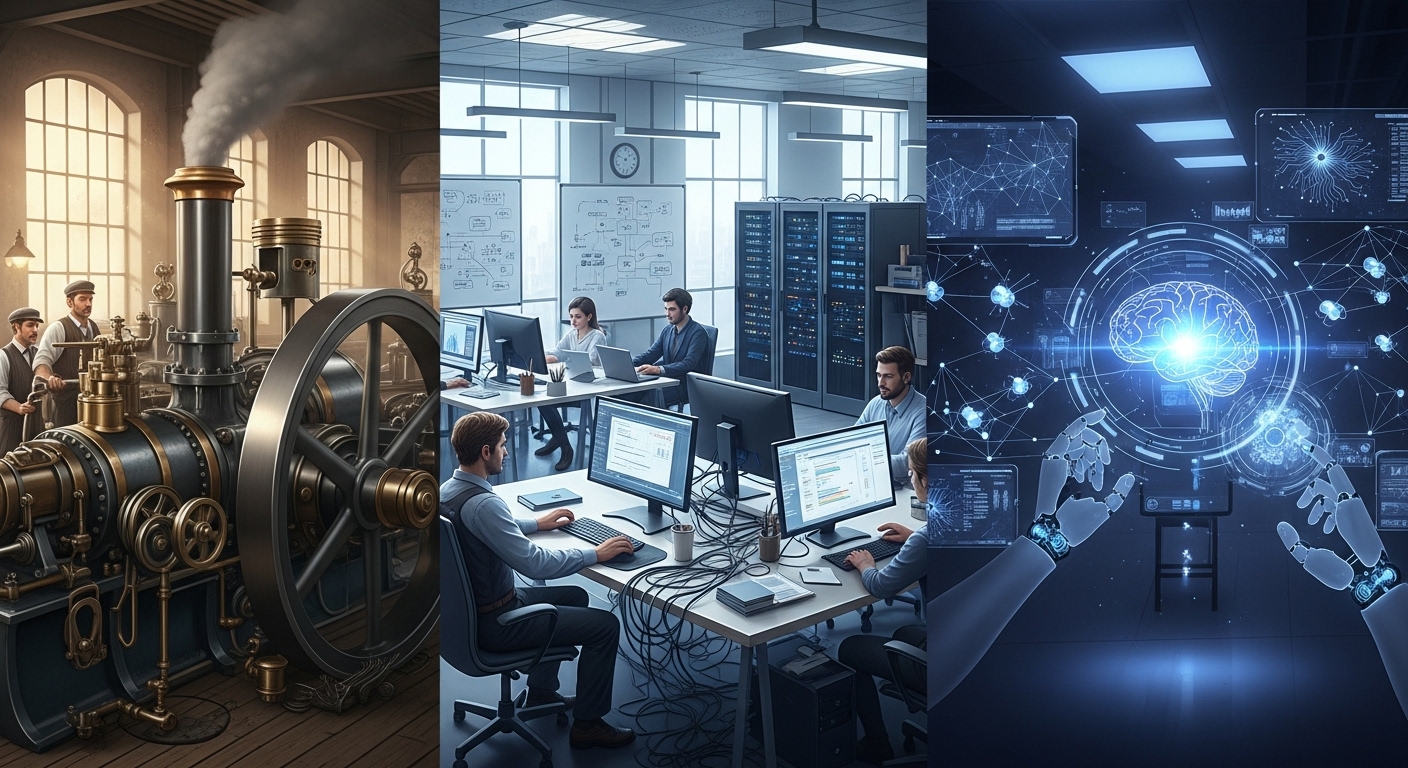
Technology has always been the heartbeat of human progress. From the first wheel to the first computer, innovation has continuously reshaped the way we live, think, and connect with one another. However, the past two decades have been unlike any other in human history. Since the year 2000, technology has exploded in ways that were once unimaginable. The digital revolution has not only transformed industries but also fundamentally altered the fabric of our society. Today, we live in an age where artificial intelligence, cloud computing, smartphones, and automation dominate our daily existence. This blog explores the incredible journey of technology from the early 2000s to the modern digital era, highlighting key breakthroughs, the people behind them, and the profound effects these changes have had on our world.
The Dawn of the Digital Age: The Early 2000s
At the start of the new millennium, technology was already on an upward trajectory. The world had just survived the Y2K scare, and the internet was beginning to seep into households across the globe. Computers were becoming more accessible, mobile phones were no longer luxury items, and digital media was replacing analog formats. However, the early 2000s were still a time of transition. Dial-up internet connections defined the online experience, social networking was in its infancy, and tech giants like Google, Apple, and Microsoft were still building their modern identities.
In the early 2000s, the internet was slow but revolutionary. Websites were mostly static, built with simple HTML pages, and search engines were just starting to improve. Email became a dominant form of communication, replacing traditional mail for businesses and individuals alike. People were discovering the power of instant connectivity, even if it came at the price of waiting for pages to load line by line. This was also the time when personal computers began to enter middle-class homes at an accelerated rate. Windows XP, released in 2001, became one of the most popular operating systems ever made, setting a new standard for user-friendly design and stability.
Mobile technology was also on the rise. Though bulky by today’s standards, early mobile phones like the Nokia 3310 became cultural icons for their durability and simplicity. Text messaging emerged as a major communication method, transforming the way young people interacted. Meanwhile, music lovers were saying goodbye to CDs and welcoming MP3 players. The iPod, introduced in 2001, changed how people consumed music, paving the way for portable digital entertainment.
The Rise of the Internet Culture
As the decade progressed, internet culture began to flourish. Social media platforms started to emerge, connecting people in new and unexpected ways. MySpace and Friendster led the way, but it was Facebook, launched in 2004, that truly redefined social networking. Suddenly, the internet was no longer just a tool for information—it was a place to express identity, connect with friends, and build communities.
YouTube, founded in 2005, brought the power of video sharing to the masses. Anyone with a camera could now become a creator, an entertainer, or an educator. This democratization of content paved the way for a new generation of influencers and self-made celebrities. Meanwhile, Google was expanding rapidly, evolving from a search engine into an all-encompassing digital ecosystem.
Another monumental shift came with the introduction of the smartphone. When Apple unveiled the iPhone in 2007, it completely changed what people expected from mobile technology. The iPhone combined communication, computing, and entertainment into a single sleek device. It was more than just a phone—it was a lifestyle statement. Google quickly followed with the Android operating system, opening the door for a competitive smartphone market that would dominate the next decade.
By the late 2000s, the digital world was becoming fully integrated with daily life. The internet was faster, wireless connections were spreading, and laptops were becoming thinner and more powerful. Cloud computing was on the horizon, hinting at a future where data would no longer be tied to a single machine. The seeds of the modern digital landscape had been firmly planted.
The 2010s: A Decade of Acceleration
The 2010s marked a new phase in technological evolution—one defined by speed, connectivity, and innovation. The smartphone became a global phenomenon. Mobile apps transformed how people shopped, learned, traveled, and communicated. The idea of “there’s an app for that” became a defining slogan of the era. Platforms like Instagram, Snapchat, and WhatsApp redefined personal interaction and visual storytelling.
Social media matured into a dominant cultural force. It was no longer just about connecting friends; it became a global marketplace of ideas, opinions, and trends. Businesses realized the power of social media marketing, and influencers emerged as a new class of digital entrepreneurs. The way brands communicated shifted from television commercials to targeted, personalized online content.
The 2010s were also the age of big data. Every click, every search, and every online purchase contributed to an enormous ocean of information. Companies began using this data to understand consumer behavior, predict trends, and optimize products. Machine learning and artificial intelligence started gaining traction as tools that could make sense of the overwhelming flood of data. Algorithms began shaping what we saw online, from recommended videos to personalized news feeds.
Meanwhile, cloud computing reached maturity. Services like Google Drive, Dropbox, and iCloud changed how people stored and shared information. Businesses adopted cloud infrastructure, allowing remote collaboration and reducing the need for physical servers. The rise of SaaS (Software as a Service) platforms made enterprise-level software accessible to small and medium-sized businesses, democratizing innovation.
E-commerce exploded in the 2010s. Amazon, which had started as an online bookstore, became a global retail empire. Online shopping became the norm rather than the exception. The convenience of ordering products with a few clicks transformed consumer expectations and forced traditional retail to adapt or perish.
The Social and Psychological Impact of Technology
While technology brought immense benefits, it also introduced new challenges. The constant connectivity of the digital age blurred the line between work and personal life. Social media, while empowering, began to influence self-perception and mental health. The need for validation through likes, shares, and followers created a culture of comparison that many found difficult to escape.
Privacy also became a major concern. With companies collecting vast amounts of personal data, questions about surveillance, consent, and digital rights grew louder. Cybersecurity threats, data breaches, and misinformation campaigns highlighted the darker side of technological dependence. Governments struggled to keep up with the rapid pace of change, leading to debates about regulation, freedom of speech, and ethical responsibility in the digital world.
Artificial Intelligence and Automation
As the 2020s began, artificial intelligence (AI) became the centerpiece of technological advancement. AI moved beyond academic research and became a practical, everyday tool. From virtual assistants like Siri and Alexa to advanced systems capable of diagnosing diseases and predicting consumer trends, AI became integrated into nearly every sector.
Machine learning models now power everything from streaming recommendations to self-driving cars. Automation has transformed industries such as manufacturing, logistics, and finance. Chatbots handle customer service, algorithms trade stocks, and robotic arms assemble products with precision far beyond human capability.
However, automation also reignited old fears about job displacement. As machines became more capable, questions about the future of work resurfaced. Would AI create more opportunities or make human labor obsolete? Many experts argue that while some jobs will disappear, others will evolve or emerge, demanding new skills and adaptability from the workforce.
The Internet of Things (IoT) and Smart Living
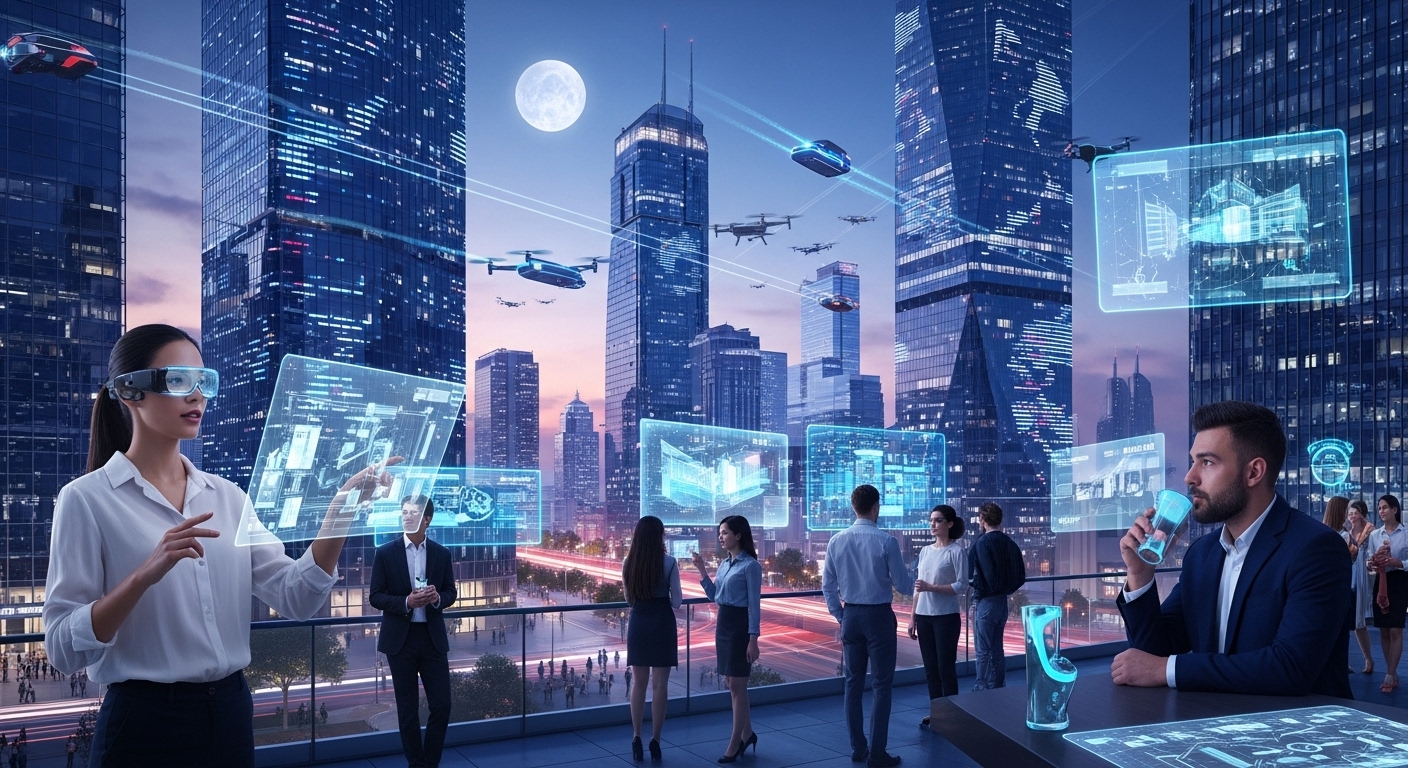
One of the defining characteristics of modern technology is interconnectivity. The Internet of Things (IoT) describes a world where everyday objects are connected to the internet, communicating with one another seamlessly. Smart homes are now equipped with devices that can control lighting, temperature, and security with voice commands or smartphone apps.
Wearable technology, like fitness trackers and smartwatches, allows individuals to monitor their health in real time. Cities are becoming smarter, using sensors to optimize traffic flow, manage energy consumption, and improve public safety. This level of integration has made life more convenient but also raised questions about data ownership and security.
The Cloud Generation and Digital Transformation
By the mid-2020s, cloud computing had become the backbone of digital infrastructure. Businesses no longer needed massive local servers; everything from file storage to software applications could run in the cloud. This flexibility accelerated innovation, allowing startups to scale quickly without heavy investment in physical infrastructure.
Remote work became a global trend, especially after the pandemic forced organizations to rethink traditional office structures. Tools like Zoom, Microsoft Teams, and Slack redefined collaboration. The workplace became virtual, and productivity tools became smarter, integrating AI to automate tasks and streamline workflows.
Digital transformation became a necessity rather than a luxury. Every industry, from healthcare to finance, embraced technology to remain competitive. Telemedicine, online banking, and digital education became mainstream, proving that technology could sustain entire economies even in times of crisis.
The Role of Artificial Intelligence in the Future
As we move further into the 2020s, artificial intelligence continues to evolve at an unprecedented rate. Generative AI systems can now create art, music, and even human-like conversation. These models are capable of understanding natural language, designing products, and generating code. The implications are vast—AI is no longer just a tool but a collaborator.
However, this progress comes with ethical considerations. The rise of deepfakes, misinformation, and the potential misuse of AI has prompted global discussions about regulation and accountability. Tech companies are now being urged to prioritize transparency, fairness, and inclusivity in their AI systems.
The future may bring AI-powered personal assistants that anticipate our needs, healthcare algorithms that detect diseases before symptoms appear, and educational tools that adapt to individual learning styles. The potential is limitless, but it must be guided by responsible innovation.
Virtual Reality, Augmented Reality, and the Metaverse
Another frontier in modern technology is immersive digital experiences. Virtual reality (VR) and augmented reality (AR) have gained traction in gaming, education, and business. VR allows users to step into fully digital environments, while AR overlays digital information onto the real world. Together, they are laying the foundation for the concept of the “metaverse”—a shared virtual space where people can interact, work, and play.
Companies are investing heavily in creating digital ecosystems where physical and virtual realities blend seamlessly. While the metaverse is still in its early stages, it promises to redefine human interaction once again, much like social media did two decades ago.
Sustainability and Green Technology
As technology continues to advance, so does awareness of its environmental impact. Data centers consume massive amounts of energy, and the constant production of electronic devices contributes to global waste. In response, the tech industry is turning toward sustainability. Renewable energy sources, eco-friendly materials, and circular economy models are becoming essential components of modern innovation.
Green technology aims to balance progress with responsibility. Electric vehicles, smart grids, and energy-efficient computing are paving the way for a more sustainable future. Consumers are also becoming more conscious, demanding ethical production and sustainable practices from technology companies.
The Human Element: Adapting to a Tech-Driven World
Amid all the technological marvels, one factor remains constant—the human element. Technology is only as meaningful as the people who use it. As the world becomes increasingly digital, emotional intelligence, creativity, and ethical awareness become more important than ever.
Education systems are evolving to teach not only coding and data science but also critical thinking and digital ethics. The future workforce will need to blend technical skills with human understanding to navigate a world where machines handle routine tasks.
The digital divide—between those who have access to technology and those who do not—remains a significant global challenge. Bridging this gap is essential to ensure that technological progress benefits everyone, not just a privileged few.
Looking Ahead: The Next Chapter of Technological Evolution
The story of technology is far from over. As we look ahead, new horizons continue to emerge. Quantum computing promises unimaginable processing power that could revolutionize medicine, cryptography, and scientific research. Biotechnology is merging with digital technology, opening doors to personalized healthcare and even human enhancement.
Space exploration is also entering a new era, powered by private companies and advanced robotics. The dream of interplanetary travel, once confined to science fiction, may soon become a reality. Meanwhile, ethical questions about artificial intelligence, digital privacy, and human identity will continue to shape global discourse.
The future will not just be about faster machines or smarter algorithms—it will be about how humanity chooses to use them. The challenge is not whether we can build more powerful technology but whether we can use it wisely, responsibly, and compassionately.
Conclusion
From the early 2000s to today, technology has taken humanity on an extraordinary journey. What began as slow dial-up connections and bulky cell phones has evolved into a world of artificial intelligence, global connectivity, and digital empowerment. Each innovation builds upon the last, propelling us toward a future filled with promise and complexity.
The evolution of technology is a mirror of human ambition. It reflects our desire to connect, to solve problems, and to create. Yet, it also reminds us that progress must be balanced with wisdom. As we stand on the brink of a new technological age, one truth remains clear—technology is not just shaping the future; it is the future.