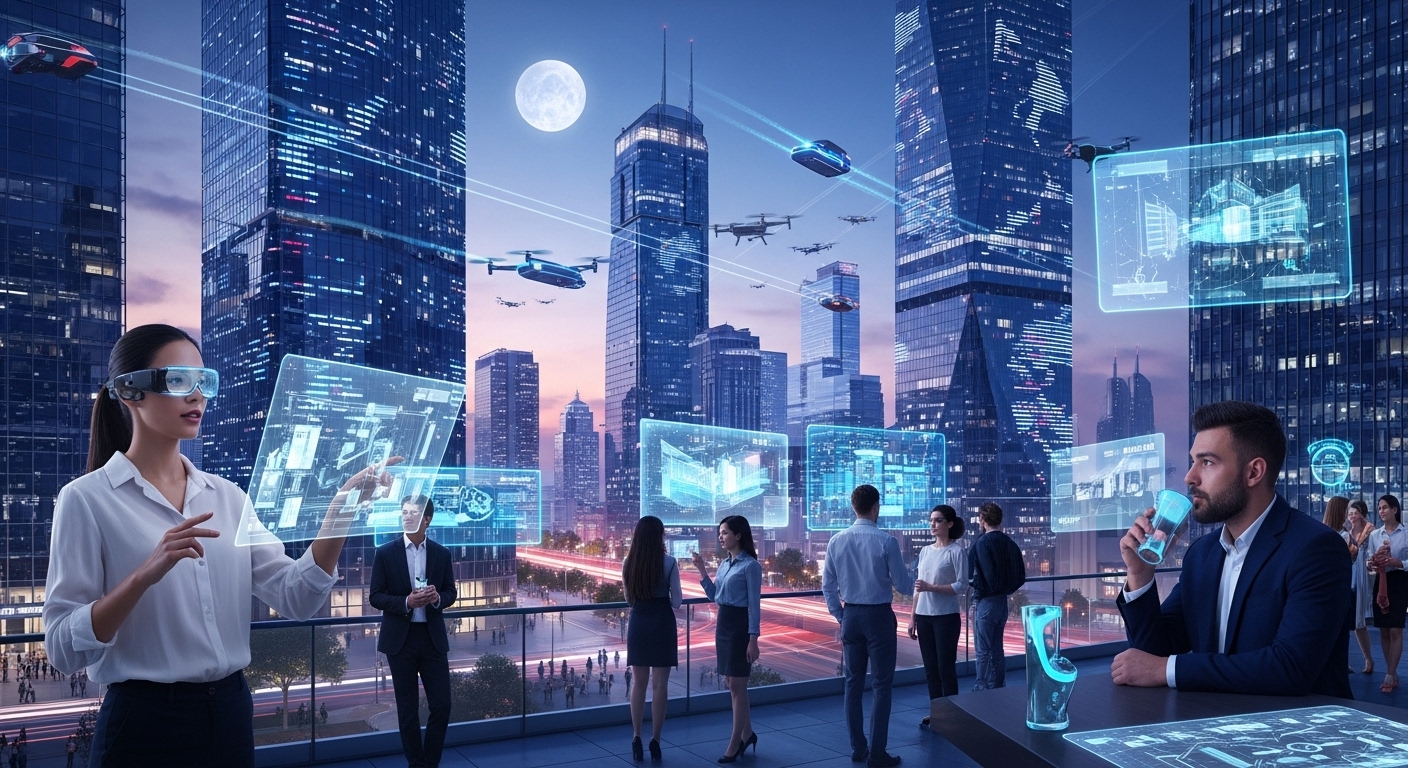
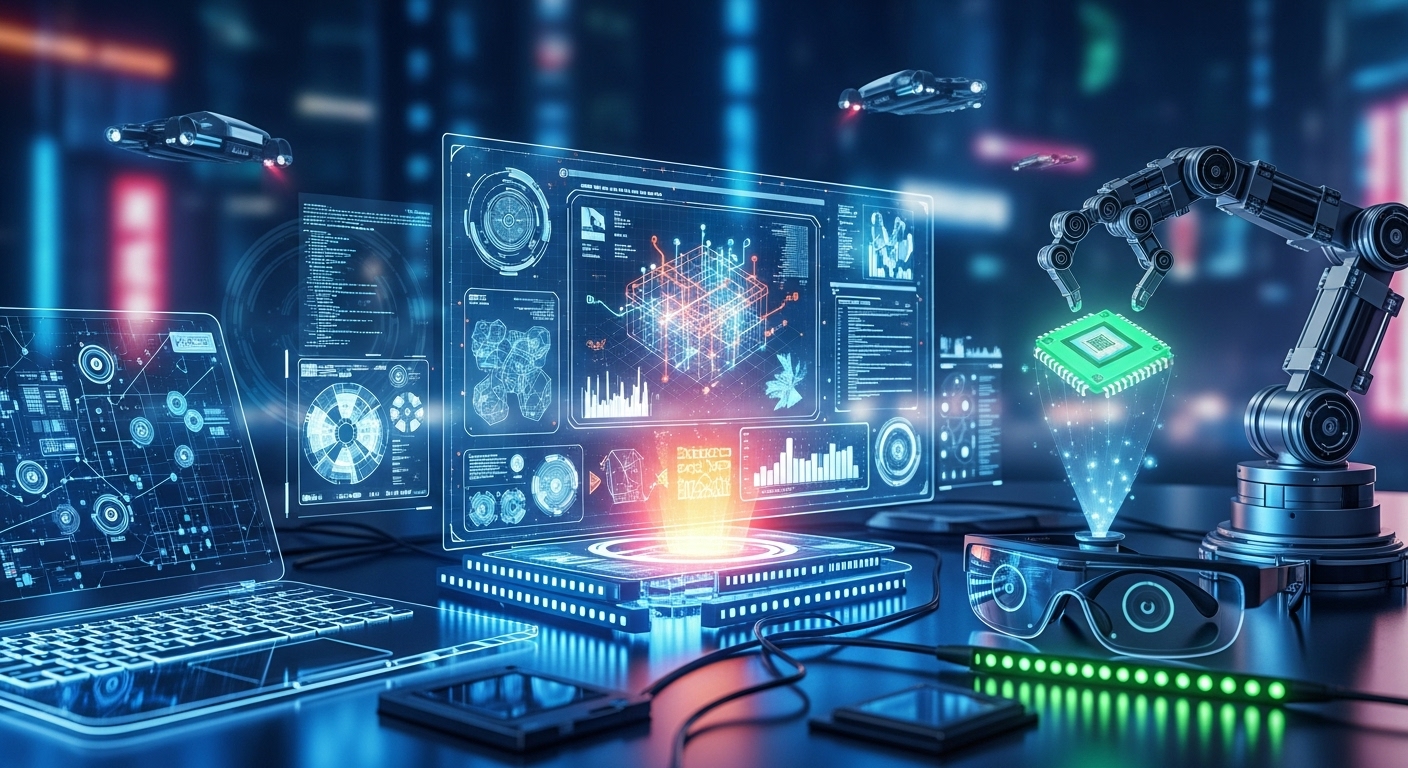
Technology is no longer a distant concept of the future. It is the pulse of modern civilization, influencing how we communicate, work, and even think. From artificial intelligence to quantum computing, the pace of innovation today is unprecedented. These technological advancements not only reshape industries but also impact daily life in profound ways. In this blog, we will explore some of the most transformative technologies and how they are shaping the world of tomorrow.
Artificial Intelligence: Revolutionizing Daily Life
Artificial intelligence, commonly referred to as AI, has moved from a futuristic idea to a tangible force shaping our everyday lives. AI systems can process enormous amounts of data, detect patterns, and make decisions faster and more accurately than humans.
Machine learning, a subset of AI, allows computers to learn from data and continuously improve without being explicitly programmed. In healthcare, AI helps diagnose diseases earlier and design personalized treatment plans. In finance, it detects fraudulent activities and predicts market trends. Even customer service has been transformed through AI-powered chatbots and virtual assistants. However, AI also brings ethical concerns such as privacy issues, algorithmic bias, and potential job displacement. Balancing innovation with responsibility is crucial for maximizing AI’s benefits.
Blockchain Technology: More Than Cryptocurrency
Blockchain technology is widely known for its role in powering cryptocurrencies, but its potential reaches far beyond digital money. At its core, blockchain is a decentralized, secure ledger system that ensures transparency and immutability.
Industries like supply chain management, healthcare, and governance are leveraging blockchain to improve efficiency and trust. In supply chains, blockchain can track goods from origin to delivery, reducing fraud and ensuring authenticity. In healthcare, patient records can be securely stored and shared across institutions while maintaining privacy. The decentralized nature of blockchain fosters transparency, accountability, and security, making it an essential technology for a digital future.
The Internet of Things: Connecting Everything Around Us
The Internet of Things, or IoT, refers to networks of interconnected devices that collect, exchange, and act on data. Smart homes, wearable fitness devices, connected cars, and industrial sensors are all examples of IoT in action.
IoT enables automation and smarter decision-making. In urban areas, it drives smart city initiatives where traffic, energy, and waste management systems communicate seamlessly to optimize resources. In agriculture, IoT devices monitor soil moisture, weather patterns, and crop health, allowing farmers to improve yields efficiently. By connecting devices across every aspect of life, IoT is creating a world that is more responsive, intelligent, and efficient.
Quantum Computing: Breaking the Limits of Classical Computers
Quantum computing represents a significant leap forward from traditional computing. Unlike classical computers that use bits, quantum computers use qubits that can exist in multiple states at once. This allows quantum computers to perform complex calculations at speeds that are impossible for classical machines.
Quantum computing has potential applications in medicine, logistics, cryptography, and more. In pharmaceuticals, it can accelerate drug discovery by modeling molecular interactions with unprecedented accuracy. In logistics, quantum algorithms can optimize complex supply chains, reducing costs and inefficiencies. While still in early development, quantum computing promises to solve problems that were previously considered unsolvable, opening new frontiers for innovation.
5G Technology: Driving a Hyperconnected World
The rollout of 5G networks is not just about faster internet speeds—it is about enabling a hyperconnected world. 5G offers low latency, high bandwidth, and the ability to connect millions of devices simultaneously.
Autonomous vehicles rely on 5G to communicate in real time with traffic infrastructure and other vehicles, improving safety and efficiency. In healthcare, 5G supports remote surgeries and telemedicine with minimal delays. Smart cities leverage 5G to manage energy, traffic, and public services effectively. By providing seamless connectivity, 5G is the backbone for a more automated and interconnected society.
Sustainable Technology: Innovation With Responsibility
Sustainability has become a crucial consideration in technology development. Renewable energy solutions, energy-efficient computing, and eco-friendly product designs are becoming the standard.
Sustainable technology not only addresses environmental concerns but also creates economic opportunities. Renewable energy projects, electric vehicles, and green data centers are expanding markets and generating jobs. Consumers increasingly prefer eco-conscious products, pushing companies to innovate responsibly. By integrating sustainability into technological advancements, we can balance progress with environmental stewardship.
Virtual Reality and Augmented Reality: Transforming Experiences
Virtual reality (VR) and augmented reality (AR) are changing how we interact with digital content. VR immerses users in entirely digital environments, while AR overlays digital information onto the real world.
These technologies have applications in education, healthcare, and entertainment. VR enables immersive learning experiences and professional training simulations, allowing students and professionals to practice skills safely. AR assists surgeons during procedures by providing real-time data overlays. In entertainment, both VR and AR provide interactive, engaging experiences. By bridging the physical and digital worlds, VR and AR are transforming human experience in multiple domains.
Cybersecurity: Protecting Our Digital Future
As technology becomes increasingly integrated into everyday life, cybersecurity is more important than ever. Every connected device, online transaction, and piece of digital information is vulnerable to attacks. Cyberattacks, data breaches, and identity theft are growing threats that require constant vigilance.
Advanced cybersecurity measures, including AI-driven threat detection, biometric authentication, and decentralized security systems, help protect sensitive data. Individuals, businesses, and governments must prioritize security to maintain trust in digital systems. A secure technological ecosystem is essential for supporting innovation and protecting privacy in an increasingly connected world.
Ethics in Technology: Balancing Progress and Responsibility
Technological advancement brings ethical challenges that society must address. AI bias, data privacy, automation-related job displacement, and surveillance are just a few areas of concern.
Responsible innovation requires collaboration between technologists, policymakers, and society. Transparent AI systems, robust data protection policies, and support for workers affected by automation are essential. Ethical frameworks ensure that technology serves humanity rather than creating harm. Balancing progress with responsibility is critical to a sustainable and equitable digital future.
The Future of Work: Humans and Machines Collaborating
Automation is reshaping how we work. Machines and AI systems are taking over repetitive and data-driven tasks, allowing humans to focus on creative, strategic, and emotional work. While automation increases efficiency, it also requires workers to adapt and reskill.
The future of work will involve collaboration between humans and machines. Humans bring creativity, empathy, and intuition, while machines provide speed, accuracy, and computational power. Preparing the workforce through continuous learning and reskilling programs is essential for thriving in this evolving environment.
Education in a Technology-Driven World
Education must evolve to prepare students for the rapidly changing technological landscape. Digital literacy, coding, data analysis, and critical thinking have become essential skills. Lifelong learning is necessary to keep pace with emerging innovations.
Educational institutions are integrating technology through online platforms, AI-assisted learning tools, and interactive simulations. Beyond technical skills, education must foster creativity, adaptability, and problem-solving abilities. By equipping learners with these skills, we prepare them to thrive in a world driven by technology.
Conclusion: Embracing the Technologies of Tomorrow
The pace of technological innovation is transforming the world faster than ever before. Artificial intelligence, blockchain, IoT, quantum computing, 5G, and immersive reality are reshaping industries, education, and daily life. At the same time, ethical considerations, sustainability, and cybersecurity must guide responsible development.
By embracing these innovations thoughtfully, society can harness the full potential of technology to improve quality of life, drive economic growth, and solve global challenges. The choices we make today will define the world of tomorrow, making it crucial to balance progress with responsibility. Technology holds the power to shape a smarter, safer, and more connected future.