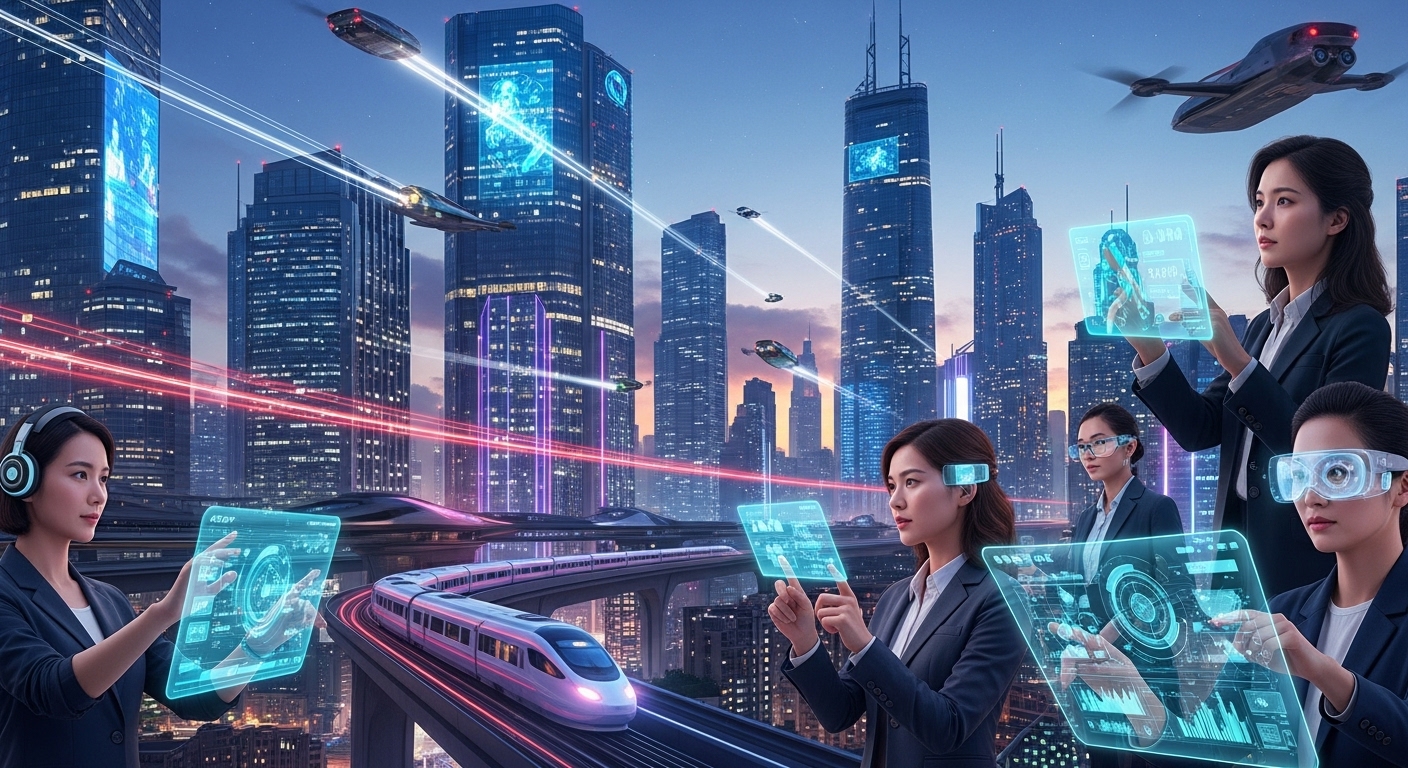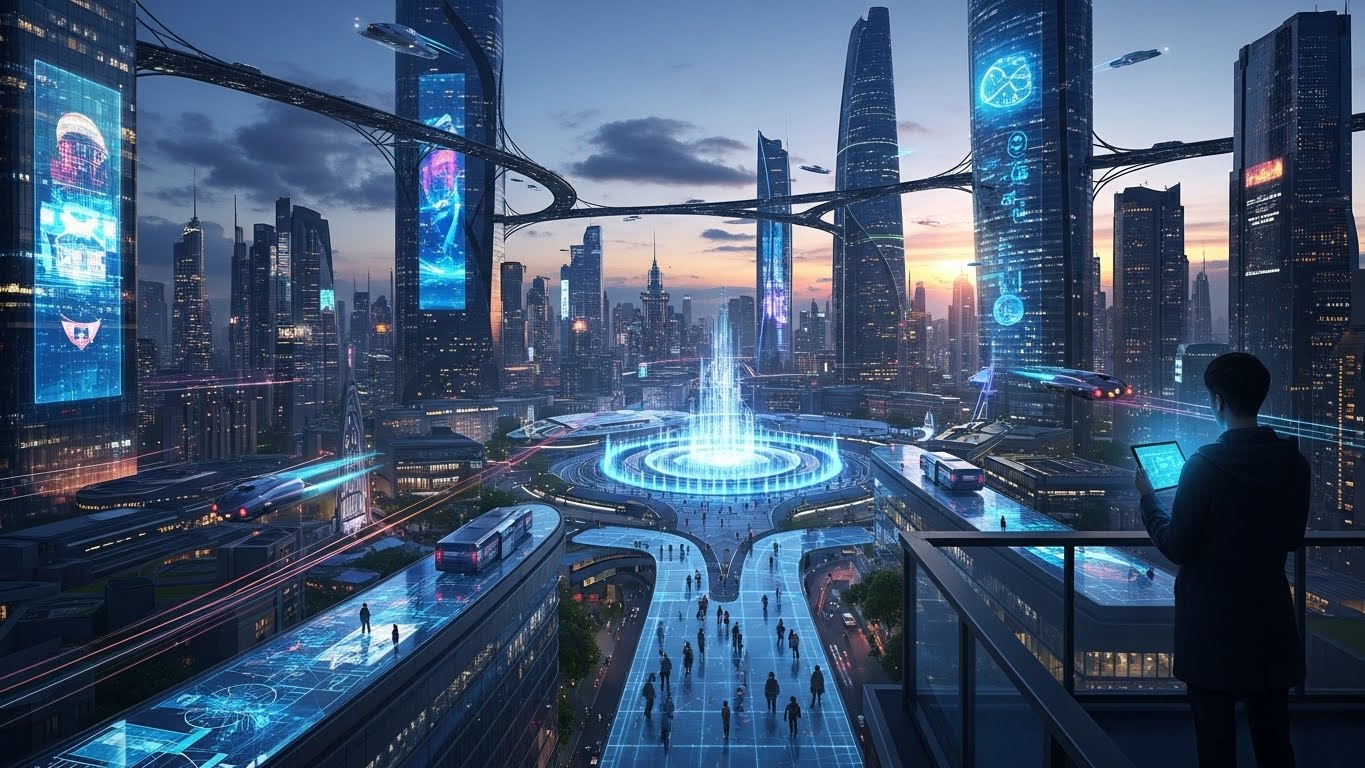

In the fast-paced world of technology, it’s difficult to keep up with every new development. However, some trends stand out for their potential to redefine industries, improve lives, and introduce entirely new ways of interacting with the world around us. From artificial intelligence and quantum computing to 5G networks and augmented reality, the next few years promise to be an exciting time for innovation. This blog post takes a deep dive into the top tech trends that are poised to shape the future.
Artificial Intelligence: The Brain Behind Tomorrow’s Tech
Artificial Intelligence (AI) is no longer confined to the realm of science fiction; it’s an integral part of our everyday lives. From voice assistants like Siri and Alexa to personalized shopping recommendations, AI has already begun transforming how we interact with technology. But as powerful as AI is today, its potential for the future is truly limitless.
Machine learning, a subset of AI, allows computers to learn from data without being explicitly programmed, making AI even more adaptive and powerful. This technology is helping industries such as healthcare, finance, and manufacturing by automating complex processes and enabling data-driven decisions. In the healthcare field, for example, AI algorithms can analyze medical images to identify diseases with greater accuracy than human doctors in some cases. Meanwhile, in finance, AI-driven tools are revolutionizing everything from fraud detection to customer service.
Looking forward, AI’s role is expected to expand even further, particularly in areas like autonomous vehicles, smart cities, and personalized medicine. While AI offers great promise, it also raises important questions around ethics, job displacement, and data privacy—challenges we must navigate as we embrace these innovations.
Quantum Computing: Unlocking Unimaginable Processing Power
Quantum computing, once considered a distant possibility, is rapidly becoming a reality. Unlike classical computers, which use bits as the smallest unit of data, quantum computers use quantum bits (qubits), which can represent and store data in multiple states simultaneously. This revolutionary approach allows quantum computers to process exponentially more data in less time, making them capable of solving problems that are beyond the reach of traditional machines.
Though still in its infancy, quantum computing promises to have a profound impact on several industries. In fields like cryptography, finance, and drug discovery, quantum computers will be able to perform complex calculations at speeds that classical computers cannot match. This could lead to breakthroughs in everything from securing digital transactions to developing new medicines that address diseases previously thought incurable.
However, quantum computing’s widespread implementation is still years away. The technology faces significant hurdles, including maintaining qubits in stable states long enough to perform calculations. Yet, as research progresses, we can expect quantum computing to eventually redefine what is possible in technology.
5G Networks: Revolutionizing Connectivity
The rollout of 5G networks is one of the most significant tech developments in recent years. Promising speeds up to 100 times faster than 4G, 5G will not only make our smartphones faster but also enable a wide range of innovations that were once thought impossible.
The low latency and high-speed capabilities of 5G will open the door to new applications in fields like autonomous vehicles, telemedicine, and smart cities. Self-driving cars, for example, will rely on 5G to communicate with one another and their surroundings in real time, making transportation safer and more efficient. In healthcare, 5G will enable remote surgeries with real-time feedback, making medical expertise available to patients in remote locations.
The sheer scale of 5G’s impact on the Internet of Things (IoT) is also worth noting. With 5G, billions of devices can be connected simultaneously without losing performance, enabling smarter homes, cities, and factories. As 5G infrastructure continues to expand, the digital transformation across industries will accelerate, creating a more connected and efficient world.
Blockchain: Beyond Cryptocurrency
Blockchain, the technology that underpins cryptocurrencies like Bitcoin, has far-reaching applications that extend beyond digital currencies. At its core, blockchain is a decentralized ledger that records transactions across a distributed network, providing transparency, security, and immutability.
Blockchain’s potential goes far beyond cryptocurrency. In supply chain management, for instance, blockchain can provide end-to-end traceability, helping businesses track the movement of goods and verify the authenticity of products. In healthcare, blockchain can be used to securely store medical records, ensuring patient privacy and enabling data sharing across different providers.
One of the most exciting possibilities is the rise of smart contracts—self-executing contracts where the terms of the agreement are written into code and automatically enforced. Smart contracts could eliminate the need for intermediaries, streamline business operations, and increase trust between parties. As blockchain technology continues to mature, we can expect it to disrupt industries ranging from banking to real estate, providing greater efficiency and security.
Augmented and Virtual Reality: New Realities on the Horizon
Augmented Reality (AR) and Virtual Reality (VR) have been around for years, but recent advances are pushing these technologies into the mainstream. While VR immerses users in a fully digital environment, AR enhances the real world by overlaying digital information onto physical spaces.
Both technologies are already having a major impact on industries such as entertainment and gaming, where VR offers fully immersive experiences and AR enables interactive mobile apps like Pokémon Go. However, the potential of AR and VR goes far beyond entertainment.
In education, VR can transport students to historical events, distant planets, or the human bloodstream, providing experiential learning opportunities that were once impossible. In healthcare, AR can assist surgeons during procedures by overlaying vital data and 3D models directly onto their field of view, improving accuracy and reducing risks. Additionally, VR has shown promise in treating mental health conditions like PTSD and anxiety by exposing patients to controlled, therapeutic environments.
As AR and VR technologies continue to evolve, they will increasingly blur the lines between the digital and physical worlds, creating immersive experiences that change the way we interact with both technology and reality.
The Rise of Smart Devices: The Internet of Everything
The Internet of Things (IoT) refers to the growing network of interconnected devices that communicate with each other over the internet. From smart thermostats and refrigerators to wearable fitness trackers and voice-controlled assistants, IoT devices are becoming a staple of modern life.
As technology advances, IoT devices are becoming more intelligent and capable of learning from their environments. Smart homes, for instance, can automatically adjust temperature, lighting, and security settings based on the preferences and habits of the occupants. In cities, IoT-enabled infrastructure can optimize traffic flow, monitor pollution levels, and improve public safety.
While IoT offers convenience and efficiency, it also raises concerns about data privacy and security. As more devices become connected, ensuring the security of personal information and preventing cyber threats will be crucial. The future of IoT will depend not only on technological advances but also on the development of robust security measures and privacy regulations.
Autonomous Vehicles: The Road to the Future
Autonomous vehicles, or self-driving cars, are no longer a distant dream. With advancements in AI, machine learning, and sensor technologies, we are closer than ever to a future where vehicles can drive themselves safely and efficiently.
Self-driving cars have the potential to revolutionize the transportation industry by reducing traffic accidents, easing congestion, and improving fuel efficiency. These vehicles rely on a combination of sensors, cameras, and machine learning algorithms to navigate the road, detect obstacles, and make real-time decisions.
Beyond personal vehicles, autonomous technology is expected to impact industries like logistics and public transportation. Self-driving trucks could transform supply chains by making long-haul deliveries more efficient and reducing the need for human drivers. Autonomous buses and taxis could provide more flexible, on-demand transportation options for city dwellers, reducing the need for personal car ownership.
While challenges remain—such as regulatory hurdles, public trust, and technological refinement—the future of autonomous vehicles is looking increasingly promising. They are poised to change how we move, work, and live.
Conclusion: The Endless Possibilities of Tomorrow’s Tech
As technology continues to advance at an unprecedented pace, the possibilities for innovation seem endless. From artificial intelligence and quantum computing to 5G networks, blockchain, and autonomous vehicles, the tech of tomorrow promises to create a world that is faster, smarter, and more connected than ever before.
However, as with any technological leap, there will be challenges to overcome—ethical dilemmas, security risks, and the need for new regulations. It is up to innovators, policymakers, and society as a whole to navigate these changes responsibly, ensuring that technology serves humanity’s best interests.
The future is bright, and the impact of these emerging technologies will be felt in every aspect of our lives, shaping how we live, work, and interact with the world around us. The journey of tech innovation is just beginning, and it’s an exciting ride ahead.