
Introduction
In the last few decades, technology has transformed from a distant and abstract concept into a tangible force that shapes every aspect of our lives. From the way we work and communicate to how we entertain ourselves and maintain our health, the influence of technology is undeniable. However, as fast as technology has evolved, the next phase of innovation promises even greater disruption. As we stand on the cusp of another technological revolution, it’s crucial to explore the technologies that will define the future and understand the immense potential they hold. In this blog post, we will explore some of the most exciting emerging technologies that are set to change the world and look at how these innovations will impact various industries and society as a whole.
The Rise of Artificial Intelligence: Redefining How We Live and Work
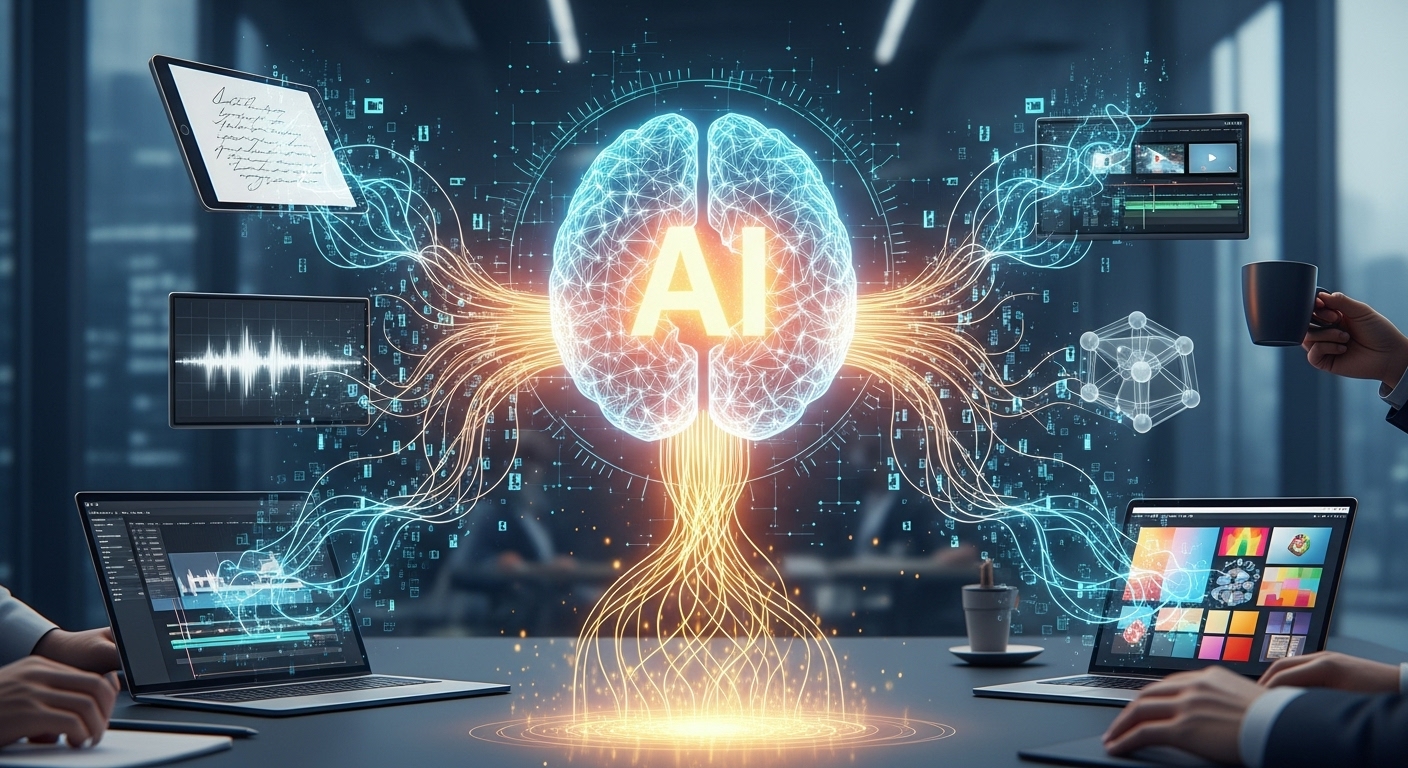
Artificial Intelligence (AI) has long been a buzzword in the tech world, but its evolution from theoretical concepts to practical applications has reached a point where AI is now an integral part of many industries. Machine learning, a subset of AI, has brought about enormous advancements in various sectors, enabling machines to learn from data, improve over time, and make decisions without human intervention.
AI-powered systems are already being used to solve complex problems in industries ranging from healthcare to finance. For example, in healthcare, AI is being used to analyze medical images and predict patient outcomes, offering doctors new tools to diagnose and treat diseases more efficiently. In finance, AI algorithms are used for everything from fraud detection to high-frequency trading, making processes faster and more accurate. In retail, AI helps personalize shopping experiences by analyzing customer behavior and making product recommendations in real-time.
One of the most exciting areas of AI development is autonomous systems, particularly self-driving cars. Companies like Tesla, Waymo, and others are pushing the boundaries of what’s possible with autonomous vehicles. AI has the potential to reduce traffic accidents, improve traffic flow, and drastically change how we think about transportation. In addition, AI’s role in automation across industries is likely to continue growing, from robotic process automation in manufacturing to chatbots handling customer service inquiries.
However, the rise of AI also raises significant ethical concerns. Issues such as data privacy, algorithmic bias, and the potential displacement of human workers need to be addressed as we continue to integrate AI into our daily lives. These challenges will require collaboration between technologists, policymakers, and society at large to ensure AI is used responsibly and for the greater good.
5G Connectivity: The Backbone of a Hyperconnected World
The rollout of 5G technology is set to usher in a new era of connectivity that will transform everything from how we communicate to how we interact with technology. 5G promises to deliver ultra-fast internet speeds, low latency, and massive network capacity, enabling new use cases and experiences that were previously unimaginable.
The speed and reliability of 5G will play a crucial role in powering the next generation of the Internet of Things (IoT), where everyday objects are connected to the internet and can communicate with each other. This will lead to the development of smart cities, where everything from traffic lights and streetlights to waste management systems and public transportation is interconnected and optimized for efficiency. With 5G, these systems can communicate in real-time, making urban environments more sustainable, energy-efficient, and safer.
In healthcare, 5G will enable telemedicine and remote surgeries with near-zero latency, allowing doctors to operate on patients in real-time from anywhere in the world. The technology will also allow for real-time monitoring of patients’ health, making it easier for medical professionals to diagnose and treat conditions more quickly and accurately.
For consumers, 5G will offer faster downloads, smoother streaming of high-definition content, and more immersive experiences in gaming and virtual reality (VR). The increased speed and low latency of 5G will make it possible to stream 4K or even 8K video on mobile devices without buffering, and it will enable seamless multiplayer gaming experiences.
The potential of 5G extends far beyond consumer entertainment, with the technology paving the way for innovations in smart homes, agriculture, logistics, and more. As 5G networks continue to roll out globally, they will unlock a whole new range of opportunities across industries.
Blockchain: Decentralizing Trust and Security
Blockchain technology has been making waves in recent years, primarily due to its association with cryptocurrencies like Bitcoin and Ethereum. However, blockchain’s potential goes far beyond digital currencies. At its core, blockchain is a decentralized and transparent digital ledger system that records transactions across multiple computers, ensuring that the data is immutable and secure.
Blockchain’s ability to provide secure and transparent record-keeping has significant implications for a wide range of industries. In finance, blockchain can be used to streamline payments, reduce transaction costs, and increase transparency in financial reporting. By eliminating the need for intermediaries such as banks or payment processors, blockchain can make transactions faster, cheaper, and more secure.
In supply chain management, blockchain can provide transparency by allowing companies to trace the origin of goods and track their movement through the supply chain in real-time. This can help reduce fraud, counterfeiting, and inefficiencies, ensuring that products are sourced ethically and delivered on time.
One of the most promising applications of blockchain is in voting systems. Traditional voting methods can be vulnerable to fraud and manipulation, but blockchain offers a way to securely record votes and ensure that elections are fair and transparent. Blockchain technology could also be used in sectors like healthcare, where it could securely store patient records, giving individuals more control over their data and ensuring that it is accessible only to authorized parties.
Despite its potential, blockchain still faces challenges in terms of scalability, energy consumption, and regulatory uncertainty. However, as the technology matures, it has the potential to disrupt industries ranging from finance and healthcare to government and logistics, offering new ways to build trust and improve efficiency.
Quantum Computing: Unlocking New Possibilities
Quantum computing is one of the most exciting and potentially transformative technologies on the horizon. Unlike classical computers, which use bits to represent information as either 0 or 1, quantum computers use quantum bits (qubits), which can exist in multiple states simultaneously due to the principles of quantum mechanics. This allows quantum computers to process information at a scale and speed that classical computers simply cannot match.
While quantum computing is still in the experimental stage, its potential to solve problems that are currently intractable for classical computers is immense. For example, quantum computers could revolutionize fields such as drug discovery, material science, and cryptography. In drug discovery, quantum computers could simulate complex molecular interactions, allowing researchers to design new drugs more efficiently and accurately. In material science, quantum computing could lead to the development of new materials with unique properties, opening the door to innovations in everything from energy storage to electronics.
Quantum computing also has significant implications for cryptography. Many of the encryption methods currently used to secure online communications are based on the difficulty of factoring large numbers, a task that is computationally expensive for classical computers. However, quantum computers could solve these problems in a fraction of the time, rendering current encryption methods obsolete. On the flip side, quantum computing also has the potential to create new, unbreakable encryption methods, which could lead to a new era of cybersecurity.
Quantum computing is still in its early stages, and significant challenges remain in building stable and scalable quantum computers. However, as progress continues, quantum computing could fundamentally change how we approach complex problems and unlock new possibilities in fields ranging from healthcare to cybersecurity.
The Green Tech Revolution: Sustainability Through Innovation
As concerns about climate change and environmental degradation intensify, technology is playing an increasingly important role in addressing sustainability challenges. From renewable energy solutions to carbon capture technologies, tech is enabling new ways to reduce our environmental footprint and transition to a more sustainable future.
Renewable energy technologies, such as solar, wind, and hydroelectric power, are becoming more efficient and affordable, and energy storage solutions are improving, making it easier to store and distribute renewable energy. The development of smart grids, powered by AI and IoT, is helping optimize energy consumption, reduce waste, and improve the efficiency of power distribution.
Electric vehicles (EVs) are another major component of the green tech revolution. With advancements in battery technology and the expansion of charging infrastructure, EVs are becoming a more viable alternative to traditional gasoline-powered cars. In addition to reducing emissions, EVs are also helping to reduce our reliance on fossil fuels, making them a key part of the transition to a sustainable energy future.
Technologies like vertical farming, precision agriculture, and sustainable water management are also helping to make food production more efficient and environmentally friendly. By using data and automation to optimize resource usage, these technologies are reducing waste and ensuring that food is produced in a way that is both sustainable and scalable.
Green technologies are not just a way to mitigate the effects of climate change—they are also creating new economic opportunities. The green tech sector is growing rapidly, with companies innovating in everything from renewable energy and electric vehicles to sustainable construction and waste management. As governments and businesses invest more in green technologies, this sector is expected to continue expanding, creating jobs and driving economic growth.
Conclusion: Embracing the Future of Technology
The technologies discussed in this blog post—AI, 5G, blockchain, quantum computing, and green tech—represent just a small sampling of the innovations that are shaping the future. As these technologies continue to evolve, they will transform industries, improve our quality of life, and tackle some of the world’s most pressing challenges.
However, with these advances come significant challenges. Issues such as privacy, ethics, and regulation will need to be carefully addressed to ensure that these technologies benefit society as a whole. By embracing these technologies with an eye toward responsible development and use, we can ensure that the future of technology is one that is both innovative and equitable.
As we look ahead, the possibilities are endless. The future of technology holds tremendous potential, and we are just beginning to scratch the surface of what is possible. The key will be to harness these innovations to create a better, more connected, and sustainable world for future generations.